
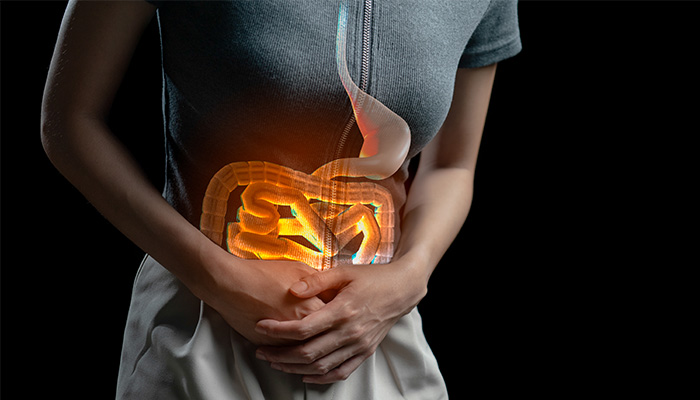
Consuming contaminated food and water can result in diarrhea and abdominal pain. It can be managed well by staying hydrated and taking antibiotics to kill the germs. At times, diarrhea and abdominal pain main recurrently occur without an underlying cause for infection. The most probable reason for this can be inflammatory bowel disease that affects approximately 4-10 people per 100,000 population every year. This may require specialized management and patient adherence.
Crohn’s disease is characterized by inflammation in the digestive tract or the gastrointestinal (GI) system. This inflammation is mediated by the immune system of our body which acts as a defense system against harmful, invading, disease-causing germs. This system may turn erroneously active and start attacking the friendly gut flora or a layer of structural molecule in the GI system. As a result of inflammation, redness, ulceration, swelling, and tissue destruction of the affected areas may take place.
Crohn’s disease- mistaken identity
Crohn’s disease may be considered as a form of inflammatory bowel disease. The inflammation starts from the wall of the affected part of the GI system and extends from the mouth to the anus. Mostly, the ileum, which is the last part of the small intestine, gets affected. The inflammation is patchy in nature, with normal bowel wall found in between multiple loci of inflammation. A consequence of inflammation is diarrhea which happens because the intestine contracts faster. Other common complaints include bleeding in stool, weight loss, skin problems, anal fissures, bone pain, and fever. Sometimes, excessive and persistent bleeding can lead to anemia. In children, malabsorbtion of nutrients due to the digestive problems leads to improper growth and development. The disease occurs in relapsing episodes throughout life.
Some complications may arise during the course of the illness. The lumen of the affected segment of the GI tract may narrow down as a result of strictures formed from scars of inflammatory patches. Ulcers deepen to form fistulae which are blind channels that open into the lumen or externally at the anal region. Sometimes, the lining of the lumen deepen to form large cracks called fissures that are very painful.
CD may run in families, affecting men and women of all ages. The susceptible age for the onset of this disease is between 20-30 years.
Diagnosing Crohn’s disease
Crohn’s disease can be diagnosed with the help of a thorough physical examination and a series of tests. A blood test may reveal anemia and an increase in the counts of white blood cells may signify inflammation. Blood tests may be done to calculate the titers of specific proteins produced by specialized cells of the active immune system. Some of these include tumor necrosis factor α (TNFα), C reactive protein (CRP), and antibodies such as perinuclear anti-neutrophilic cytoplasmic antibody (P-ANCA), and anti-Saccharomyces cerevisiae antibodies (ASCA). Antibodies are specific proteins produced by white blood cells as a part of the immunological response.
Other than the above tests, a liver function test may also be necessary. With the help of a stool test, the extent of bleeding and inflammation can be assessed. Some other tests include a series of X-rays after drinking barium meal. In this test, a viscid solution will coat the entire digestive tract and restrict the inflammation to the upper GI tract. Similarly, a barium enema will help to restrict inflammation in the lower GI tract. Further in the diagnosis, your doctor may call for an endoscopy of your GI tract to get a clear picture of the affected portion and also secure a fragment of tissue to be studied under a microscope. Endoscopy requires that a flexible, lighted tube mounted with a tiny camera that is linked to a TV screen, be inserted from the anus to inspect the intestine. This test revels red patches with ulcers as well as bleeding.
Treating Crohn’s disease
CD can be treated with the help of medications, nutritional supplements, and surgery. The treatment option is chosen based on the location, severity of complications, and response to earlier treatments, in case there are recurring symptoms.
Inflammation can be controlled with the help of medicines such as mesalamine. Since they are not absorbed by the GI tract, these anti-inflammatory agents are released to act locally in the GI tract. Steroids such as prednisone and immune suppressive agents such as azathioprine and 6- mercaptopurine may be used to relieve the immune response and thereby, control inflammation. The immune response can also be blocked with infliximab, which is anti-TNFα.
the overgrowth of bacteria in the intestines. Replenishing the lost fluids is important to overcome dehydration due to diarrhea. Surgery is an option when complications such as perforation, stricture, or excessive bleeding takes place. To overcome nutrient deficits, nutritional supplements are given to children. Essential nutritional deficiencies may vary from individual to individual, depending upon the extent and segment of GI tract that is involved. Additional nutritional supplementation may aid in preventing essential nutrient deficiency.
A well-planned treatment includes controlling inflammation, relieving symptoms, and rectifying nutritional deficiencies. Although CD cannot be cured, the number of episodes can be limited. In case of a flare up, the treatment required to restrict the inflammation may be different from other episodes. In case the medical treatment fails or complications arise, surgery is usually required. Surgery cannot completely cure the disease as inflammation may recur in a previously healthy area of the GI tract even after surgery. In certain patients, multiple surgeries may be required. A portion of the large or small intestine may be surgically removed but good care of the surgical stump is required. Essential nutritional deficiencies may vary from individual to individual, depending upon the extent and segment of GI tract that is involved. Additional nutritional supplementation may aid in preventing essential nutrient deficiency.
Living with Crohn’s disease
A patient with CD can lead an improved quality of life, provided one is well-informed about the disease in terms of the causes, symptoms, treatment, and precautions. A combination of medical treatments and surgery can help in leading a more productive life. Although there may not be any fool proof option of treatment for Crohn’s disease, the intensity and number of incidences can certainly be reduced.


